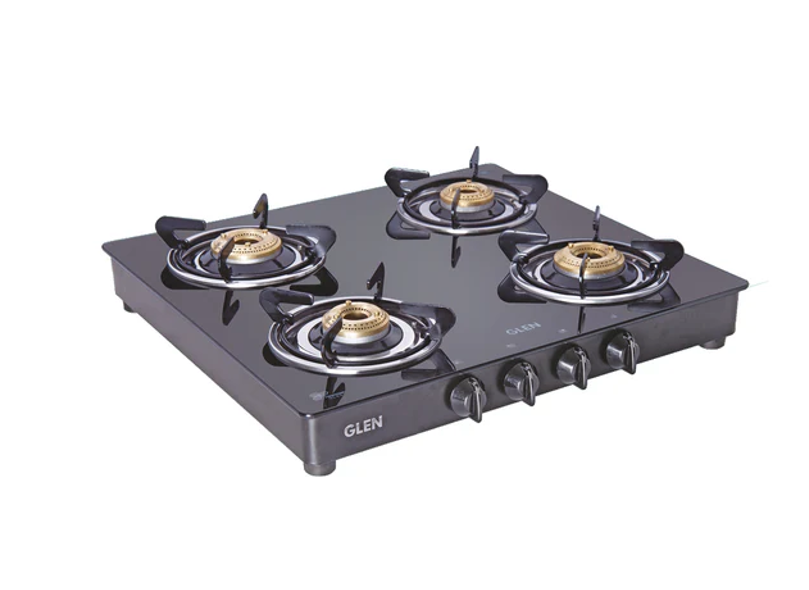
Most of us don’t think twice about our gas stove until it starts giving trouble. But here’s a number worth pausing on: LPG-related burns account for roughly 11% of all burn admissions recorded in a major hospital study over just one year, and the majority traced back to leaks or handling errors in the stove system, not the cylinder alone. A big chunk of that risk comes from something as simple as fumbling with a matchstick near an open gas knob. If that sounds familiar, your kitchen might be overdue for an automatic ignition stove.
Here are 6 signs it’s time to make the switch to an automatic ignition stove.
1. The Burners Take Multiple Tries to Light
Old burners wear down in ways that aren’t always obvious until you’re standing there flicking a lighter for the fifth time. Ports get clogged with grease and food residue, spark plugs weaken, and what should be an instant flame turns into three or four attempts, with gas escaping into the air each time you fail to light it. This isn’t just frustrating, it’s a genuine safety concern, since every unsuccessful attempt lets a little more gas build up around the burner. Auto ignition stoves solve this with a multi-spark system that fires reliably on the first try, so you’re not standing over an open gas knob repeatedly hoping it catches. Less unburnt gas in the kitchen means fewer chances for anything to go wrong.
2. You Cook With Kids or Elderly Family Members Around
A matchstick lit in a busy kitchen is truly a risk factor, and a greater one based on whose presence will be felt while you cook. Children are naturally curious and prone to grab whatever comes within their reach, especially at the most inconvenient moments. Your elderly relatives may not have the firmest grasp or reflexes they used to have when dealing with an open flame in the vicinity of the gas knob. Eliminating the matchsticks reduces a whole range of risks that can happen in the kitchen right away. It’s not some big remodelling job or a costly procedure but just another small safety measure that protects everyone in your kitchen, not only yourself while cooking.
3. Your Current Stove Has No Flame Failure Protection
This is not always easy to notice, but it can be considered more significant than most would think. In case the flame goes out due to boiling water splashing over it from the pot, a draft through an open window, or just by stirring clumsily, the gas does not get switched off immediately after the fire goes out. The gas continues pouring into the air of your kitchen until somebody pays attention and turns off the switch, and it can take much longer than necessary in a busy household. Modern automatic ignition stoves are equipped with a useful appliance as Flame Failure Device which automatically stops the flow of the gas as soon as the flame goes out.
4. Your Stove Looks and Feels Outdated
When your stove has spent over ten years on your counter, there will be visible signs of aging in it. The rusty or sticky knobs, the warped drip pan which no longer rests firmly, the surface that no longer comes clean despite all your efforts- such are the signs of an aging stove that can no longer function as well as it did. Apart from being unsightly, the aging surfaces tend to be less sanitary, since the grooves and scratched surface are easier to accumulate grease and other food residues. The newer models of stoves combine automatic ignition and scratch-resistant glass or steel tops which make the process of cleaning much easier.
5. You’re Constantly Cleaning Up Spills From an Old Design
Old stoves lack a drip tray entirely, while others have a pan support that is too small for modern kitchens’ needs, where larger vessels are used. The consequence of such design flaws is a complete loss of control whenever something boils over and spills on the surface. This makes cleaning especially difficult because spilled liquids spread not only across the stovetop but also into all the corners that are impossible to clean easily. If you find yourself cleaning the same sticky spots regularly regardless of your attentiveness during cooking, it is a problem with the design and not your cooking skills. Therefore, make sure to choose a stove that has an adequately sized drip tray and pan supports.
See also: Why Law Firm Bookkeeping Is Essential for Financial Accuracy and Sustainable Growth
6. You Cook for a Large Family
If you have to be preparing meals regularly for an entire family, then uneven flames and long heating times not only become inconvenient but actually end up costing you time every day, particularly when you want to prepare multiple meals at once. An inefficient flame not only takes more time to cook food but also consumes more fuel and leads to inconsistency in your meals. Cooking appliances that automatically ignite and are made using forged brass burners not only take lesser time to heat but also make sure that the flames are even throughout the bottom surface of the vessel. This ensures that you can easily prepare multiple meals like dal, rice, and some frying at the same time.
Conclusion
None of these signs need to pile up before you act. Even one or two are reason enough to consider a change, especially when the alternative is a small daily safety risk that’s completely avoidable.
If you’re currently using a gas chulha with manual ignition, moving to an automatic one isn’t a big adjustment. The knob operation stays the same, you just skip the matchstick step entirely. If any of these signs sound familiar, it’s worth exploring Glen Appliances’ range of automatic gas chulha, built with forged brass burners, sturdy toughened glass tops, and flame failure protection for safer everyday cooking.
Explore the collection on Glen Appliances and upgrade your kitchen today.
