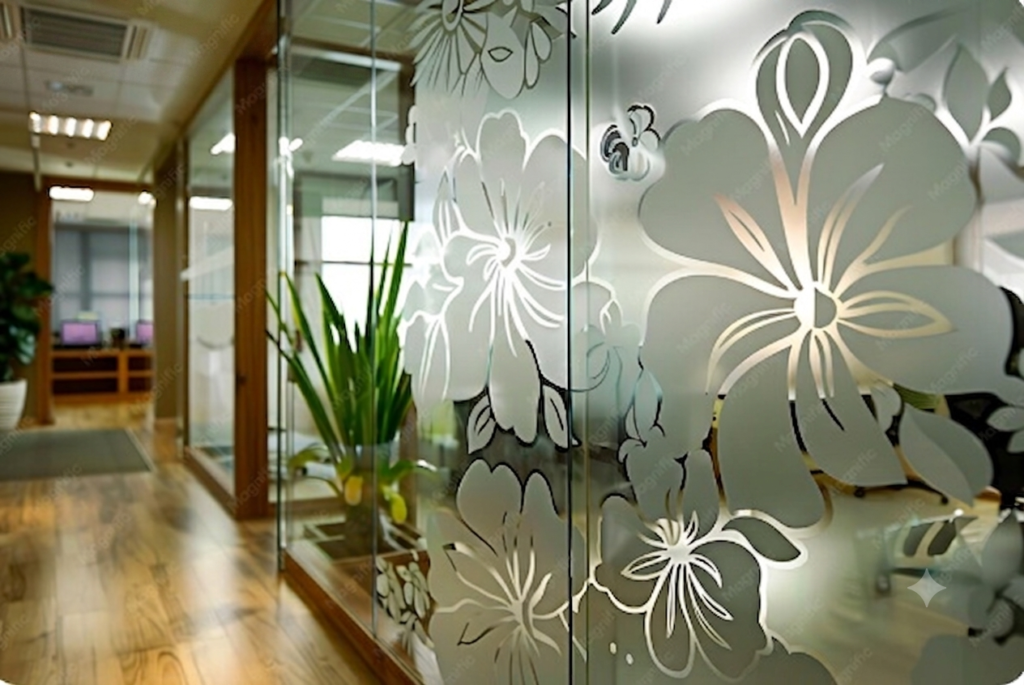
Glass is a popular architectural feature because it brings natural light into a space while creating an open and modern appearance. However, clear glass does not always provide the privacy, visual separation, or decorative character that a room needs. Decorative glass films offer a flexible way to enhance glass surfaces without completely replacing existing windows, doors, or partitions. Available in a range of patterns, textures, finishes, and levels of opacity, these films can be used to create attractive interiors in homes, offices, retail spaces, hospitality environments, and other properties.
What Are Decorative Glass Films?
Decorative glass films are specially designed materials that can be applied to compatible glass surfaces to change their appearance or provide additional privacy. They can create effects that resemble frosted, etched, patterned, textured, or colored glass.
One of the main advantages of using film is that it can transform existing glass without requiring a complete replacement. This can make it a practical option for property owners who want to update the appearance of their space while keeping the existing glass structure.
Decorative films can be used for both functional and aesthetic purposes. Some designs provide partial privacy while allowing natural light to pass through, while others can create stronger visual separation.
The choice depends on the space, design goals, privacy requirements, and type of glass.
1. Create Privacy Without Blocking Natural Light
Privacy is one of the most common reasons property owners choose decorative film. Clear glass can make certain rooms feel exposed, particularly when they are located near entrances, hallways, neighboring buildings, or busy areas.
A frosted or patterned film can obscure direct views while allowing daylight to enter. This creates a balance between privacy and brightness.
In homes, this approach can be useful for bathroom windows, bedroom doors, entry areas, and street facing glass.
In commercial spaces, it can work well for conference rooms, private offices, reception areas, consultation rooms, and glass partitions.
2. Add Style to Plain Glass
Large areas of plain glass can sometimes look unfinished or lack visual character. Decorative film provides an opportunity to introduce patterns and design elements without replacing the glass.
Simple geometric patterns can complement contemporary interiors, while softer designs can work well in traditional or relaxed spaces.
Because films are available in different styles, property owners can select an appearance that complements existing furniture, flooring, wall colors, and architectural features.
This makes decorative film a useful design tool rather than simply a privacy solution.
3. Enhance Office Glass Partitions
Modern offices often use glass partitions to create separate work areas while maintaining an open atmosphere. Although glass helps natural light move through the workplace, complete transparency may not be suitable for every room.
Decorative film can be applied to selected sections of glass partitions to create visual separation. For example, a conference room may use frosted bands or patterned sections to provide privacy while maintaining a sense of openness.
The placement of the design can also be customized to suit the office layout. Some businesses may prefer a simple horizontal pattern, while others may want a more prominent decorative treatment.
4. Improve Conference Room Privacy
Conference rooms often contain confidential information or sensitive discussions. Clear glass can make it difficult to maintain privacy, particularly in busy offices.
Applying a decorative film can reduce direct visibility into the room. Frosted sections can be positioned at eye level while leaving other areas transparent.
This allows natural light to continue entering the room while creating a greater sense of privacy.
The design can also contribute to the professional appearance of the conference room, making the glass feature part of the overall office design.
5. Transform Glass Doors
Glass doors can make rooms feel larger and brighter, but they may sometimes appear too plain. Decorative film can add visual interest while also making the door more noticeable.
This can be especially useful for reducing the risk of people accidentally walking into transparent glass. A visible pattern or frosted section can make the glass easier to identify.
Decorative designs can range from subtle bands to larger patterns depending on the property’s requirements.
6. Add Visual Separation in Homes
Open floor plans are popular because they create a spacious feeling, but homeowners may still want to separate certain areas.
Glass partitions can provide separation without making the home feel closed off. Decorative film can further define these areas by creating a semi private visual barrier.
For example, a glass partition between a home office and living room can be treated with a frosted pattern. This provides a greater sense of separation while still allowing light to pass between spaces.
The same approach can be used between kitchens, dining areas, entryways, and other parts of the home.
7. Create Attractive Bathroom Glass
Bathrooms often require privacy while benefiting from natural light. Decorative film can be used on bathroom windows, shower glass, doors, and other suitable surfaces.
Frosted finishes are particularly useful because they obscure direct views while maintaining brightness.
Patterns can also introduce a decorative element to the bathroom. Depending on the interior style, homeowners can choose subtle designs or more noticeable patterns.
8. Support Branding in Commercial Spaces
Glass can also provide an opportunity for businesses to incorporate visual branding into their environment.
Decorative film can be designed with shapes, patterns, or other visual elements that reflect a company’s identity. It can be used on entrance doors, reception areas, partitions, meeting rooms, and other glass surfaces.
A branded glass treatment can help create a consistent appearance throughout a commercial property.
Businesses should consider keeping designs clear and professional so they complement the environment rather than making the space feel visually crowded.
9. Enhance Retail Store Interiors
Retail spaces frequently use glass for storefronts, display areas, partitions, and entrances. Decorative film can help businesses create visual interest while managing privacy in selected areas.
Patterns can be used to highlight specific sections of a store or create a transition between public and private spaces.
Depending on the design, film can also support seasonal or promotional themes. Because film can be changed more easily than permanent glass treatments, businesses may have greater flexibility when updating their interiors.
10. Improve Reception Areas
The reception area is often the first part of a business that visitors experience. Its appearance can influence the overall impression of the property.
Decorative glass treatments can add sophistication to reception desks, partitions, doors, and nearby windows.
A carefully selected pattern can complement furniture and lighting while helping create a cohesive interior design.
For professional environments, subtle frosted designs can provide privacy without overwhelming the space.
11. Create Custom Design Features
One of the advantages of decorative film is the ability to create customized visual effects.
Instead of applying the same design to every glass surface, property owners can choose different treatments for different areas.
A home may use a subtle frosted pattern in the bathroom and a more artistic design in a living room partition.
A business may use simple privacy bands in offices and a more distinctive design in the reception area.
This flexibility makes decorative film suitable for a wide range of interior design concepts.
12. Offer a Practical Alternative to Glass Replacement
Replacing glass can involve significant planning, labor, and expense. Decorative film can provide a way to update compatible glass without removing the existing panels.
This can be particularly useful when the glass itself is in good condition but the owner wants to change its appearance or privacy level.
The film can provide a refreshed look while preserving the existing glass structure.
However, the condition and type of glass should always be evaluated before installation to confirm compatibility.
Choosing the Right Decorative Film
Choosing the right film involves more than selecting a pattern that looks attractive. Property owners should consider the amount of privacy required, the amount of natural light they want to preserve, the location of the glass, and the overall design of the space.
For high privacy areas, a more opaque finish may be appropriate. For spaces that only need partial privacy, a lighter frosted pattern may be sufficient.
The size and placement of the design are also important. Large patterns can become a prominent design feature, while smaller patterns can provide a more subtle appearance.
Owners should also consider how the film will look under different lighting conditions.
Professional Installation Considerations
Proper installation is important for achieving a clean and professional finish. Glass surfaces need to be carefully prepared before the film is applied.
Accurate measurement is also important, especially when the glass has unusual shapes or multiple panels need to align with one another.
Professional installation can help reduce visible imperfections and ensure that the design is positioned correctly.
For commercial properties, installation should also be planned around business operations to minimize disruption to employees and customers.
Maintaining Decorative Glass Film
Maintaining decorative film is generally straightforward. Regular cleaning can help preserve the appearance of the glass, but appropriate cleaning materials should be used.
Abrasive tools and harsh chemicals may damage the film depending on its construction. Property owners should follow the recommended cleaning instructions for the specific product.
Regular maintenance is particularly important in high traffic areas such as entry doors and reception spaces.
Design Tips for Better Results
When selecting decorative film, consider the existing design of the room. The pattern should complement rather than compete with furniture, flooring, lighting, and wall finishes.
Neutral and subtle designs can provide long term flexibility, while bold patterns can create stronger visual impact.
It is also important to think about the purpose of each glass surface. A conference room may require more privacy than a decorative partition in a living room.
Using different designs in different areas can create variety while maintaining a consistent overall style.
Are Decorative Glass Films Right for Your Space?
Decorative glass films can combine design and functionality in a practical way. They can improve privacy, add visual interest, create separation, support branding, and refresh the appearance of existing glass. If you are looking to enhance the style or privacy of your glass surfaces, contact us to discuss your requirements and explore suitable decorative options.
They are suitable for many residential and commercial applications, including windows, doors, partitions, reception areas, bathrooms, offices, and retail environments.
The key to a successful installation is choosing a design that suits the space and a film that meets its functional requirements. Professional assessment and installation can also help ensure compatibility and achieve a clean finished appearance.
With thoughtful planning, decorative film can turn ordinary glass into an attractive design feature while continuing to provide the natural light and openness that make glass such a popular architectural element.
