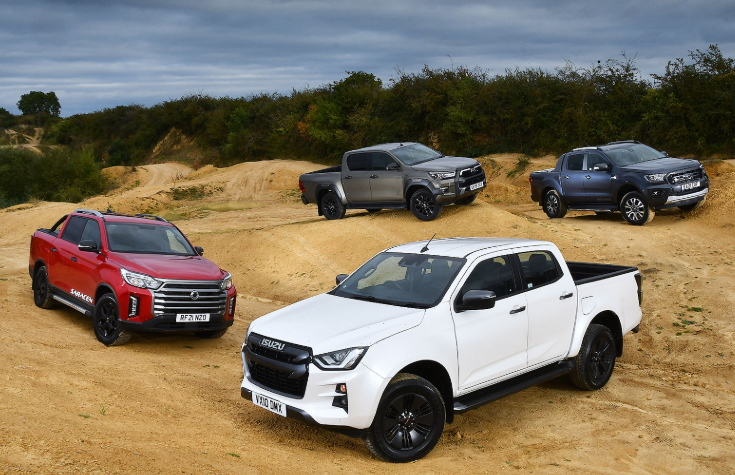
There is an awkward gap in the vehicle market where a great many businesses operate. The work has outgrown a pickup, but a medium-duty truck seems like more vehicle than is needed. Landscaping crews, building trades, service companies, mobile repair operations, and small delivery businesses all live in this range, and the choice between vehicle classes has more effect on daily operations than most owners expect.
The decision is frequently made by default. The business already has a pickup, so it buys another pickup. Or someone believes a van is more professional, or a truck is more capable, and the choice follows a general impression rather than the actual requirement.
Whether the answer turns out to be a van, a heavier pickup, or something in the range covered by Chevrolet & GMC Business Trucks, the way to reach it is the same: define the load, the access requirements, and the licensing constraints first, and let the vehicle class follow.
Start With What You Carry
Payload is the first filter and the one most often estimated optimistically.
Weigh what you actually carry rather than estimating it. Tools, materials, equipment, and the accumulated contents of a working vehicle add up to considerably more than most people guess, and a crew vehicle carrying passengers loses payload for each of them.
Account for the heaviest day rather than the average one. A vehicle that is adequate most of the time and overloaded on delivery days is overloaded, with the legal and mechanical consequences that follow.
Deduct the body or equipment weight. A service body, a crane, racking, or a tipping mechanism all consume payload before anything is loaded.
Consider towing separately, since towing capacity and payload interact and a vehicle at its payload limit has less capacity to tow safely.
Once the real figure is known, whole classes of vehicle either qualify or do not, which narrows the decision considerably.
Access, Security, and How the Work Happens
The physical pattern of the work usually decides between a van and an open bed.
A van encloses the load, which matters for tools and materials that should not be exposed to weather or to theft. For trades leaving a vehicle on a street overnight, this is often decisive.
An open bed accepts loads that will not fit through a door: long materials, bulky items, and anything loaded by machine. Landscaping, building supply, and waste-carrying work generally favour it.
Side access matters for vehicles that are worked out of throughout the day. A van with a side door and internal racking functions as a mobile workshop in a way a bed does not.
Loading height affects every lift. A lower deck is easier all day, and where heavy items are handled, a tail lift or ramp changes the work substantially.
Weather protection for the operator, not just the load, is worth weighing for anyone working out of the vehicle in all conditions.
The Licensing Question
This constraint is frequently discovered after purchase rather than before.
Vehicle weight ratings determine what licence category is required to drive, and the thresholds vary by jurisdiction. A vehicle above the threshold narrows the pool of people who can legally operate it, which matters for hiring and for covering absence.
Additional regulatory requirements may apply above certain weights, including inspection regimes, record keeping, and in some cases operator licensing.
Driver hours rules can apply to heavier vehicles or to certain uses, adding administrative obligations.
For a small business, a vehicle that any employee with an ordinary licence can drive is operationally simpler, and that consideration often outweighs a modest capability advantage.
Checking the specific thresholds that apply where you operate, before committing, prevents an expensive surprise.
Running Costs Across the Range
The cost differences between classes are not always in the expected direction.
Fuel consumption rises with weight and with the aerodynamic penalty of a body, but a smaller vehicle making two trips may use more than a larger one making one.
Insurance varies by class and by use, and commercial rates differ from personal ones.
Maintenance costs rise with size, and heavier vehicles may require commercial servicing rather than general garage work.
Tyres are a meaningful ongoing cost that scales with the vehicle.
Depreciation patterns differ. Work vehicles used hard depreciate faster than the mileage suggests, and body condition drives resale as much as mechanical condition.
Comparing across classes on a cost-per-working-day basis is more useful than comparing purchase prices, since a vehicle that does the job in one trip has a different economics from one that needs two.
Buying for the Work You Have
Two errors dominate at this decision point.
Under-buying produces a vehicle that is overloaded, wears quickly, cannot take on larger jobs, and is replaced sooner than planned. The saving on purchase is consumed by maintenance and by the work that had to be declined.
Over-buying produces a vehicle that costs more to buy, run, insure, and maintain than the work requires, and that may need a licence category that limits who can drive it.
The reasonable approach is to specify for the heaviest work you do regularly, not for the exceptional job you do twice a year. Renting or subcontracting the exception is almost always cheaper than owning capacity that sits unused.
And where the business is growing, specify for the work you expect within about two years, because the cost of replacing a vehicle early exceeds the cost of a slightly larger one at the outset.
