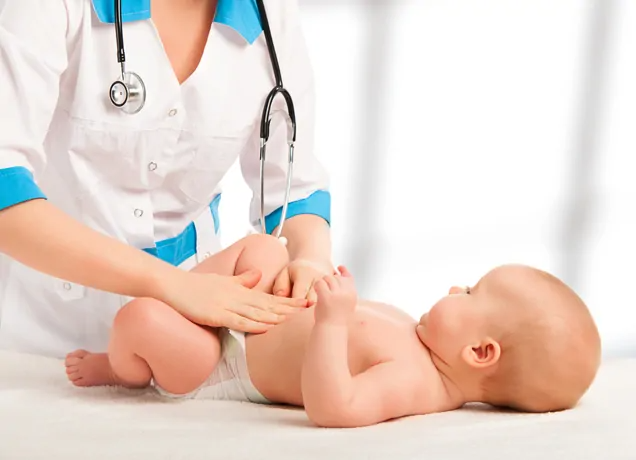
Having a baby is an amazing time. There is lots of paperwork and lots of questions! One question you often get asked by the nurse is about the Newborn Screening Test. This is a quick blood test used to find any hidden health issues in the first few days of life. Most babies pass the test. However, a small number of babies will be offered early treatment due to the results of the test. Here is a breakdown of what the screening looks for.
What Is This Test All About?
The screening is a simple test. A few drops of blood are taken to test for a number of rare conditions. Often the baby can seem fine but will actually have a condition. The blood sample is then put on a card and sent to the lab to be analysed [2]. Thousands of babies are diagnosed with serious and potentially life-threatening conditions in the United States using this method [2]. The screening is very successful as it can offer early treatment [2].
When Should Your Baby Be Tested?
The screening is best done between 48 hours and 5 days after birth [1]. Some screening programmes prefer between 48 and 72 hours. However, it can be done after 24 hours [6]. Most hospitals will plan this in advance. If you had a home birth or birth at a small clinic, ask your doctor what date it will be done on.
How Is the Sample Collected?
The screening is a simple test. A nurse will clean the baby’s heel and use a small lancet to prick the baby. A few drops of blood will fall onto a special card [3]. Some labs will allow a finger prick [1]. The card is then left to dry and sent off to the lab. The baby may be a little grizzly, but it is quick and only causes a small amount of discomfort [3]. If you can cuddle and feed whilst pricking, it can help calm the baby [5]. The screening itself only takes a few minutes.
Which Diseases Can the Test Detect?
The screening varies depending on where you are. One screening in India tests for 11 conditions including 7 congenital disorders and 4 haemoglobinopathies [1]. Genetic, metabolic and endocrine disorders are screened for [1]. Public screening programmes will have their own list of conditions. For example, in the UK the NHS screen for 9 rare disorders including sickle cell disease, cystic fibrosis and homocystinuria [4]. They also screen for phenylketonuria and an underactive thyroid [5]. In Western Australia they screen for congenital hypothyroidism, cystic fibrosis, severe combined immunodeficiency and spinal muscular atrophy [6].
The screening will vary depending on what screening your hospital offers. It is always best to ask what the full list of conditions is. A good screening report should list all the conditions clearly.
Why Do Blood Disorders Matter So Much?
Some of the conditions affect the haemoglobin in the blood. These include sickle cell disease and thalassemia [1]. Both of these are inherited conditions. The baby may seem fine for weeks but can develop issues such as pain, weakness and infections. By finding these early the doctors can plan for treatment. Early treatment can improve their health and reduce the risk of severe disability or death [5]. Babies with beta thalassemia major are usually picked up and referred for early treatment [5].
What Do the Results Mean?
The screening can be done quickly. One screening in India gives results within 2 days [1]. This means the doctors can begin treatment quickly. It is important to remember this is not a diagnosis. It is just to highlight any babies who may need further investigation. If they do need further investigation the doctor will advise you on what to do next. Most babies will have a normal result however a small number can begin early treatment [5].
Is the Test Safe for My Baby?
Most parents will be worried about the needle. This is understandable. However, the prick will only cause short term discomfort and the baby will usually cope well [3]. It is quick and only causes temporary pain. One health service states there are no known risks [5]. Keeping your baby warm and calm can help. Many families find cuddling and feeding helps.
What About Cost and Choice?
Many families will be worried about the cost. If you are in India one private screening programme costs ₹2500 and tests for 8 conditions [1]. It only requires a dried blood spot. Government hospitals may have different screening. Ask your doctor.
Do Parents Have to Say Yes?
Screening is not mandatory in the UK but is recommended [5]. Parents should be given clear information so they can make an informed decision. Ask the nurse what the card is for and how you will receive the results. Talking to your baby calmly before the prick can help reduce stress. Many families will compare private and public screening. The screening may not be for the same conditions.
Who Should Get Tested?
All babies can benefit from screening. Even if you had a smooth pregnancy and birth and no one in your family has any known illnesses it is still a good idea to have the screening. In the UK and Western Australia all babies are offered screening [5][6]. In India one lab recommend screening all newborns [1].
How Can Parents Prepare?
There is no special preparation required [3]. Just bring your paperwork from the birth and ask when they will take the sample. Write the date down as you may need to come back. Feed your baby on time to keep them calm.
A Few Myths Worth Clearing Up
Many people think screening is only for sick babies. Many families will be told this by family members and delay the screening. However, it is the opposite. It is for babies who look well but may have conditions that are not obvious [6]. Some people think it is a full health check but it is only for the conditions listed. Some parents are worried that if they need further investigation they will definitely have a diagnosis. However, the doctors will need to do further tests.
Final Thoughts for New Parents
The heel prick can take minutes but can help protect your child for life. The number of conditions varies. In the UK there are 9 conditions, in India there are 11 conditions and other places have more [1][4][6]. Talk to your paediatrician and ask what the conditions are. Book in for the sample in the first few days. The real benefit of screening is that you can offer early treatment [2].
Sources
1. LifeCell Diagnostics, Newborn Screening (11 Conditions), lifecell.in
2. Centers for Disease Control and Prevention, About Newborn Dried Blood Spot Screening, cdc.gov
3. Sprint Diagnostics, Neonatal Screening 4 Conditions, sprintdiagnostics.in
4. NHS Newborn Blood Spot Screening Programme, programme information page, e Learning for Healthcare portal
5. Mediclinic, New Born Screening and the Heel Prick Test, mediclinic.ae
6. Government of Western Australia Department of Health, Your Newborn Baby’s Bloodspot Screening Test, healthywa.wa.gov.au
