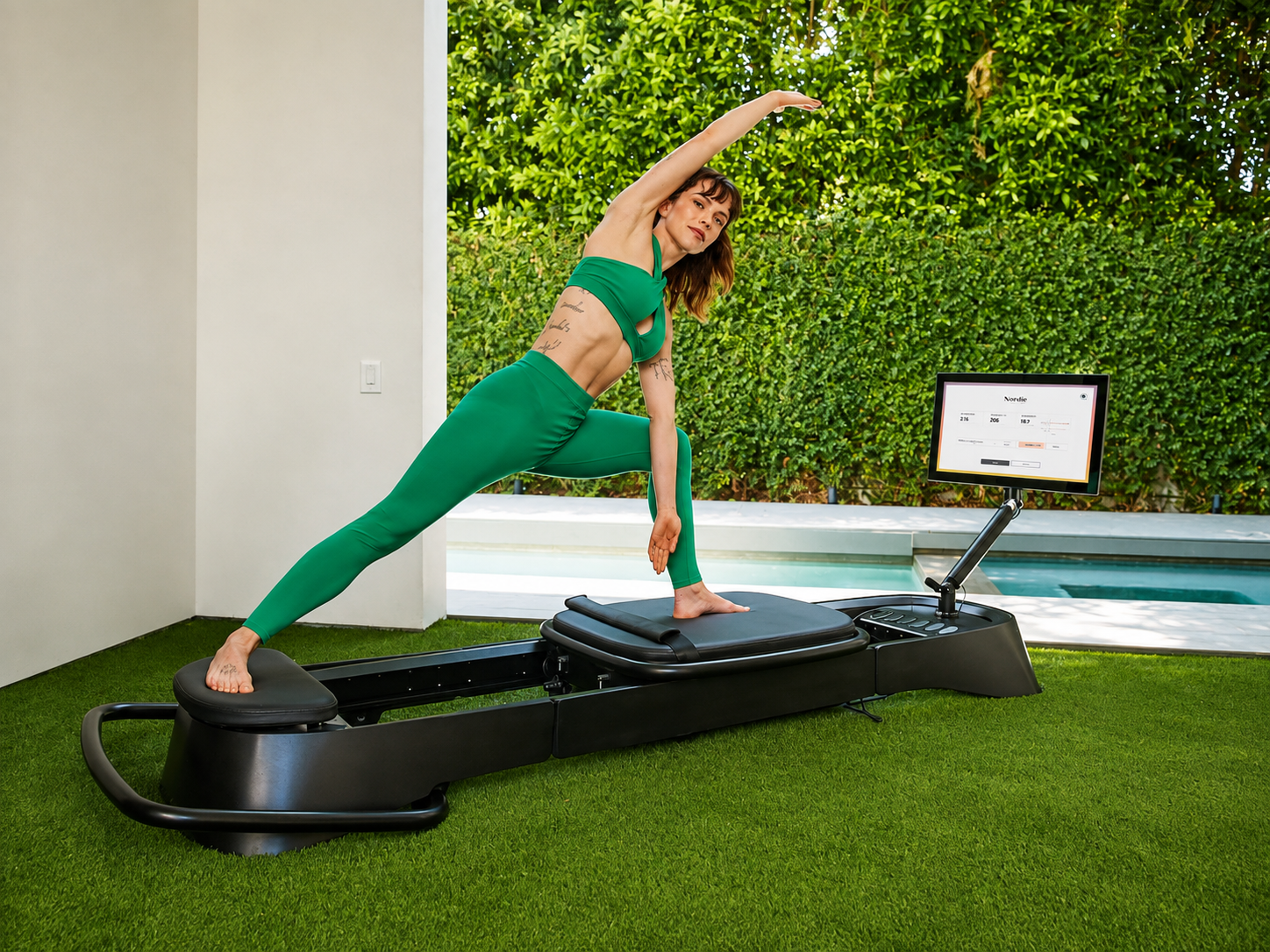
A Pilates transformer machine can give home users more ways to train than a basic mat setup. With a combination of springs, a moving surface, straps, bars, and adjustable components, this type of equipment can support exercises for the legs, core, arms, hips, and upper body.
The name can refer to Pilates equipment designed to change or adapt its setup for different exercises. Depending on the model, a transformer style machine may combine features associated with reformers, towers, or other Pilates equipment. Because designs vary, it is worth checking the exact configuration, dimensions, resistance system, and available adjustments before choosing one for home use.
For someone creating a dedicated workout area, the main advantage is exercise variety. A single machine can provide options for strength work, mobility, balance, coordination, and controlled movement without requiring several separate pieces of equipment.
What Is a Pilates Transformer Machine?
A Pilates transformer machine is a versatile piece of Pilates equipment that can be adjusted or configured for different exercises.
Unlike a simple mat, it provides external resistance and physical support. Springs can create resistance during pushing or pulling movements, while straps and bars can guide the body through different exercise patterns.
The exact design depends on the manufacturer and model, but a transformer style machine may include features such as:
- Adjustable springs
- A carriage or moving platform
- Footbar
- Straps
- Handles
- Shoulder supports
- Tower components
- Adjustable bars
- Additional exercise attachments
Because there is no single standardized configuration for every transformer machine, users should evaluate the actual equipment rather than relying only on the product name.
See also: Best Dental Implant Provider: Understanding Experience, Technology, and Care
Why Use a Transformer Style Pilates Machine at Home?
The main benefit is flexibility in exercise selection.
A single session can include lower body exercises, core movements, upper body resistance work, and mobility exercises. You can also change the setup according to the type of workout you want to perform.
For example, one session may focus heavily on the legs and hips, while another may use straps for upper body movements.
This can be useful for people who prefer variety but do not want multiple machines occupying their home.
The equipment also allows resistance to be adjusted for different exercises.
Resistance Makes Each Exercise More Adjustable
Springs are an important part of many Pilates machines.
They can provide resistance when you push the carriage, pull straps, or perform other controlled movements. Depending on the exercise, changing the spring setup can alter how much assistance or resistance you experience.
A heavier setting is not automatically better.
The correct resistance should allow you to maintain control and alignment throughout the movement.
If the carriage moves too quickly, the straps become difficult to manage, or your posture changes to compensate, the resistance may need to be reduced.
Learning how different spring settings affect individual exercises is part of becoming comfortable with the equipment.
Lower Body Workouts
The lower body can be trained through several machine based Pilates exercises.
Footwork is a common starting point.
You position your feet on the designated support and press against resistance while controlling the return movement.
The exercise can target the legs and hips while requiring stability through the trunk.
Other possible movements may include:
- Lunges
- Bridging
- Single leg work
- Hip extension
- Side leg exercises
- Squat variations
The exact exercises available depend on the machine’s configuration.
Rather than trying every movement immediately, start with exercises that match your experience level and learn how the equipment responds.
Core Training With a Transformer Machine
The moving components of Pilates equipment can make core training more demanding.
During many exercises, the arms or legs move while the torso needs to remain stable.
This creates a coordination challenge.
A controlled core exercise might involve moving the carriage while keeping the pelvis and ribcage organized.
The goal is not to make the carriage travel as far as possible.
A smaller movement performed with good control can be more appropriate than a larger movement that causes the torso to shift.
As you become more familiar with the equipment, you can progress to more challenging variations.
Upper Body Training
Straps and handles can provide resistance for the arms, shoulders, chest, and back.
Exercises can include pulling and pressing movements performed in different positions.
The straps also require coordination because they can move independently of the body.
For example, during a rowing movement, you need to control both the pulling phase and the return.
Avoid allowing the springs to pull the straps back abruptly.
Slow movement helps maintain control and allows you to notice whether your shoulders and torso remain in the intended position.
Exercises for the Back and Shoulders
Upper body Pilates exercises can help develop controlled movement around the shoulders and upper back.
Chest expansion and rowing style movements are examples of exercises that can be performed with straps on suitable equipment.
The focus should remain on movement quality.
Keep the shoulders from lifting unnecessarily toward the ears, and avoid using momentum to complete the movement.
Your torso should remain stable unless the exercise specifically requires spinal movement.
Hip Mobility and Flexibility
A transformer style machine can also support mobility focused sessions.
Straps may assist certain leg movements, while the carriage can provide a controlled way to explore different positions.
Hamstring stretches are one example.
The strap can support the leg while you work within a comfortable range.
Hip mobility exercises may also involve controlled lunges or leg movements.
Do not force a stretch simply because the machine allows a greater range.
Your comfortable range should determine how far you move.
If an exercise causes sharp pain or unusual discomfort, stop and seek appropriate guidance.
Balance and Coordination
Some Pilates machine exercises require one leg to support the body while another limb moves.
These exercises can challenge balance and coordination.
Standing movements should be introduced only after you understand how the equipment behaves.
The moving carriage can create an unstable environment, so start with a supported position.
Focus on:
- Stable foot placement
- Controlled carriage movement
- Upright posture
- Slow transitions
- Appropriate resistance
As your control improves, more demanding standing exercises can be introduced.
Creating Different Workout Types
A transformer machine can support several types of sessions.
Strength Focused Workout
Begin with lower body exercises, add upper body resistance movements, and finish with controlled core exercises.
Mobility Session
Use comfortable stretches and controlled range of motion exercises.
Full Body Workout
Combine leg, upper body, core, and mobility movements in one session.
Technique Session
Use lighter resistance and focus on learning movement patterns.
This flexibility means you do not need to perform the same routine every time you use the machine.
How to Choose the Right Machine for Your Home
The equipment needs to fit your room as well as your workout preferences.
Start by measuring the available space.
Do not measure only the machine itself.
You also need clearance around it for movement, mounting, dismounting, and accessories.
If the equipment folds or can be stored upright, measure the storage area too.
Consider where you will actually use it.
A machine placed in a cramped room may technically fit but still be uncomfortable to operate.
Check the Equipment Dimensions
Dimensions become particularly important for home users.
Check:
- Overall length
- Overall width
- Height
- Carriage length
- Folded dimensions
- Storage requirements
- Required clearance
If multiple people will use the machine, make sure the adjustments accommodate each person.
Height and body proportions can affect how comfortably someone can use the footbar, carriage, straps, and other components.
Pay Attention to Weight Capacity
Always check the manufacturer’s stated user weight limit.
This information is particularly important for home equipment because the machine must support both the user and the forces generated during movement.
Do not assume that two machines with similar dimensions have the same capacity.
If more than one person will use the machine, base the decision on the requirements of the heaviest intended user.
Look at Adjustability
Adjustable equipment can be more practical when different people use the same machine.
Look for adjustable:
- Footbar positions
- Spring resistance
- Shoulder supports
- Headrest positions
- Strap lengths
- Tower components
- Other exercise attachments
Adjustments should also be simple enough that you will actually use them.
A complicated setup can become frustrating when you need to change the equipment repeatedly during a workout.
Consider the Carriage Movement
If the machine includes a carriage, pay attention to how it moves.
A good setup should allow controlled movement without excessive noise or unwanted wobbling.
The carriage should return smoothly when the springs pull it back.
The padding should also provide enough support for exercises that require longer periods on the machine.
If you have access to a showroom or demonstration, try several movements rather than simply sitting on the machine.
Think About Storage
Home equipment has to work with your lifestyle.
If the machine will remain assembled, make sure there is a permanent area for it.
If you plan to store it after each session, consider how easy it is to move.
Important factors include:
- Equipment weight
- Wheels
- Handles
- Folding mechanism
- Storage height
- Available floor space
A machine that is difficult to move may discourage regular use.
Accessories and Attachments
Additional attachments can increase exercise variety.
Depending on the model, you may find options such as:
- Pilates box
- Jump board
- Tower
- Extra springs
- Handles
- Straps
- Extension components
Before buying accessories, check whether they are compatible with your specific machine.
Do not purchase attachments simply because they are available.
Consider which exercises you actually intend to perform.
Beginner Friendly Use
A transformer machine can be used by beginners, but the equipment itself may initially seem complicated.
Spend time learning the basic components.
You should understand:
- How to adjust the resistance
- How to change the footbar
- How to use the straps
- How to mount and dismount safely
- How the carriage moves
- How to secure adjustable components
Start with foundational exercises before attempting advanced movements.
Instruction from a qualified Pilates professional can be especially useful during the first few sessions.
Progressing Your Workouts
Progress does not have to mean adding more resistance every week.
You can progress by:
- Improving movement control
- Increasing the range of motion gradually
- Adding repetitions
- Changing exercise variations
- Using more challenging positions
- Improving balance
- Increasing resistance when appropriate
For example, a beginner might first learn a basic footwork pattern.
Once that movement becomes comfortable, they can work on more controlled repetitions or introduce a different foot position.
Progress should remain appropriate to your ability.
How to Build a Home Routine
A simple routine can include several movement categories.
Start with a warm up using controlled, low intensity movements.
Move into lower body exercises.
Then add upper body resistance work.
Follow with core exercises.
Finish with mobility or gentle stretching if appropriate.
You can change the exercises between sessions rather than trying to include every available movement in one workout.
A 30 minute session may look very different from a longer training session, and both can be useful depending on your schedule and goals.
Maintaining Your Pilates Equipment
Regular maintenance helps keep the equipment in usable condition.
Inspect the machine according to the manufacturer’s instructions.
Check springs for visible damage or unusual changes.
Inspect straps and ropes for signs of wear.
Make sure adjustable components lock securely.
Check moving parts for unusual sounds or resistance.
Do not continue using equipment if a critical component appears damaged.
Use replacement parts recommended by the manufacturer rather than improvised alternatives.
Common Mistakes to Avoid
Choosing equipment without measuring the room
A machine needs enough space for both the equipment and the user’s movements.
Using too much resistance
Excessive resistance can compromise control.
Starting with advanced exercises
Build familiarity with the equipment first.
Ignoring user dimensions
Height and body proportions affect equipment setup.
Buying unnecessary accessories
Only purchase attachments that support your intended workouts.
Treating every workout as high intensity
Different sessions can have different purposes. Technique and mobility work can complement strength focused training.
FAQ
What is a Pilates transformer machine?
It is a versatile Pilates machine designed with adjustable components and resistance systems that can support different types of exercises. The exact configuration varies between models.
Can beginners use a Pilates transformer machine?
Yes. Beginners can use this type of equipment, although learning the basic setup and exercises from a qualified instructor can make the process easier and safer.
Can a transformer machine be used for full body workouts?
Yes. Depending on its configuration, it can support exercises for the legs, hips, core, arms, shoulders, and back.
Does a Pilates transformer machine build strength?
The adjustable resistance can challenge muscles during controlled movements. Strength development depends on exercise selection, resistance, training frequency, and progression.
Can it be used for flexibility exercises?
Many Pilates machines can support stretching and mobility exercises. The equipment should be used to assist controlled movement rather than force the body into extreme positions.
How much space does a transformer machine need?
The exact requirement depends on the model. Measure the equipment and allow additional clearance for exercise movements, mounting, dismounting, and accessories.
Should I buy extra attachments?
Only if they support the exercises you plan to perform. Check compatibility with your specific machine before purchasing accessories.
How often should I use the machine?
Training frequency depends on your experience, workout intensity, and recovery. Beginners may start with a few sessions per week and adjust their schedule as they become more comfortable with the equipment.
What should I check before buying one?
Check the machine’s dimensions, weight capacity, resistance system, adjustment options, carriage length, storage requirements, warranty, maintenance requirements, and available accessories.
