A digital model can reveal awkward interfaces before a prototype exists, but it can also create false confidence. Attractive color plots and precise looking results may hide uncertain material inputs or unrealistic loading assumptions. For a ceramic component, the value of simulation depends on how closely the model addresses the questions that matter to the design.
The most useful starting point is a decision, not a software package. Engineers should identify what they want to learn, which observations can verify it, and how the result will influence the next drawing revision. This keeps modeling effort focused and makes uncertainty easier to discuss.
Identify the question before building the mesh
A model may examine where a mounting load concentrates, how clearances change during heating, or which geometric feature deserves closer review. These are different tasks. Trying to answer all of them at once can produce a complicated model whose assumptions are difficult to inspect.
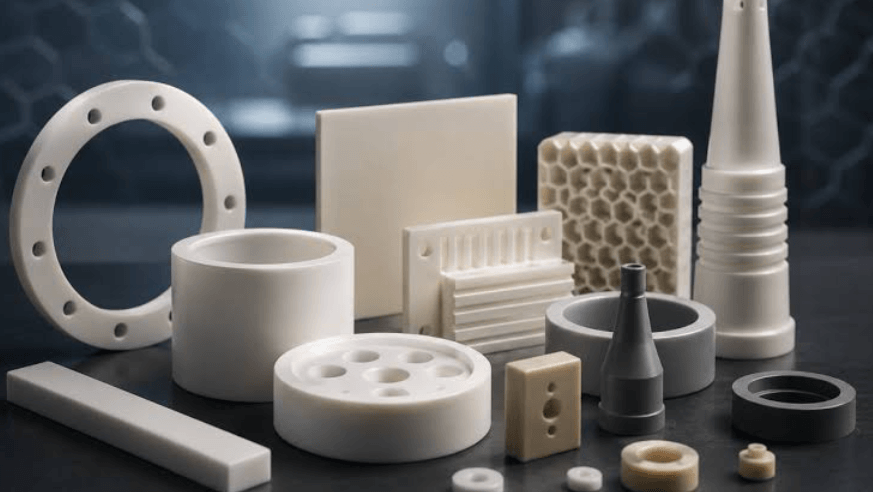
When evaluating Composite ceramics, the team should request information for the proposed grade rather than assigning generic ceramic values. The name covers different material systems. A model intended for an alumina and zirconia combination should not silently inherit data from a fiber reinforced ceramic or an unrelated monolithic grade.
Document the inputs that affect the decision
Create a short record of geometry, material data, loads, contact conditions, and temperature assumptions. For each input, distinguish measured information from a preliminary estimate. This record need not become a lengthy report, but it should allow another engineer to understand what the results actually represent.
Pay particular attention to the surrounding assembly. If a metal holder supports the ceramic, include the behavior relevant to their interaction. Treating the holder as perfectly rigid may simplify the model, but the team should understand whether that simplification changes the question being investigated. Convenient assumptions need explicit ownership.
Simplify geometry without removing its purpose
Small features can increase modeling effort without improving the answer. Some may reasonably be removed during an initial study. Other features define contact, alignment, or a local load and should remain. Decide based on function rather than deleting every detail that makes the mesh inconvenient.
An example is a locating shoulder beside a clamp. Its role may matter more than a distant cosmetic recess. Discuss these choices with the person responsible for the drawing. The model should retain the geometry necessary to investigate the intended failure mechanism, while avoiding detail that distracts from it.
Explore sensitivity instead of one perfect result
If assembly friction, applied preload, or a temperature boundary is uncertain, evaluate plausible alternatives. A result that changes dramatically when one uncertain input shifts deserves more investigation. A stable ranking between two design options may be useful even when the absolute prediction remains uncertain.
Keep the study organized so each run has a clear purpose. Varying many assumptions simultaneously can make it hard to identify what caused a difference. Start with the inputs most likely to affect the decision and summarize their influence in words. The design team needs to understand the implication, not simply receive a collection of screenshots.
Avoid treating a stress plot as a life guarantee
A numerical result does not by itself establish service life or acceptable reliability. Material variability, surface condition, environmental exposure, and actual component loading may require additional assessment. The model can guide design and testing while leaving those questions open.
Be especially careful around apparently extreme values near contacts or geometric transitions. Before treating a local maximum as decisive, review the modeling setup and whether the result is physically meaningful for the question. Refinement should improve understanding. It should not become an exercise in producing increasingly precise numbers from inputs that remain poorly established.
Connect simulation to a physical trial
Design a test that challenges the model’s important assumptions. If the analysis predicts a sensitive mounting region, inspect that region and vary the installation conditions within the intended range. If temperature behavior drives the design, measure where the model assumes the relevant boundary conditions occur.
Record differences between prediction and observation, then decide whether the model needs correction. A mismatch is useful information when it exposes an overlooked contact or operating condition. Update the input record and retain earlier results so the team can explain why the design changed. This makes the digital work a traceable engineering tool.
Simulation is most valuable when it narrows uncertainty and helps choose the next practical step. For ceramic components, disciplined inputs, targeted sensitivity studies, and physical verification matter more than elaborate graphics. A modest model that answers a real design question can contribute more than a detailed model whose assumptions no one has checked.
