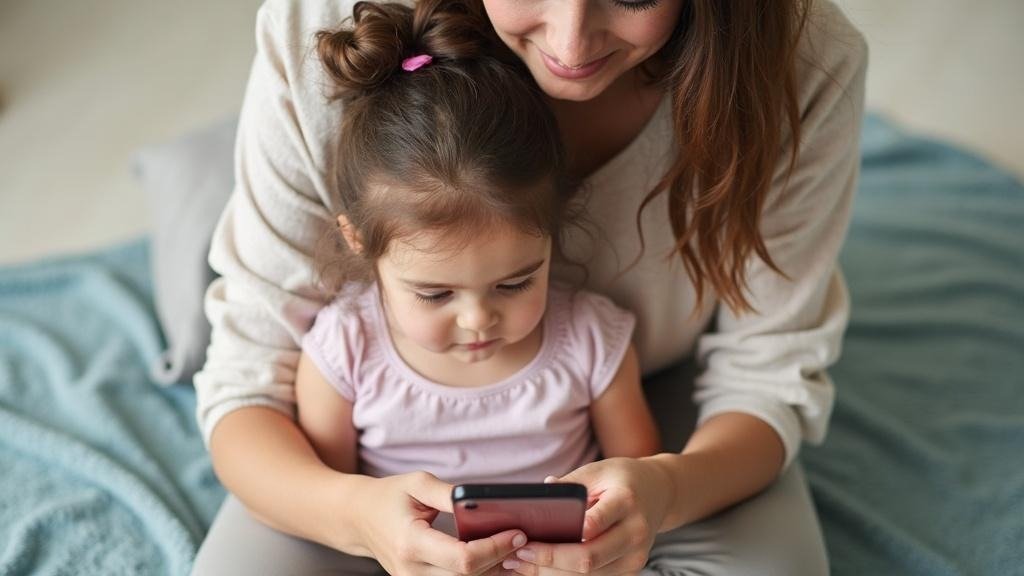
The single thing that separates a useful speech app from a forgotten one is whether a two-year-old will come back to it tomorrow. Engagement isn’t a bonus feature. It’s the whole game.
Below, picks are grouped by what they do best, not by an arbitrary overall rank. None of these apps substitutes for a qualified speech-language pathologist. Think of them as between-session practice or a low-barrier way to build daily talking habits.
For outside context, see this asha.org.
Best for Play-Based, Pressure-Free Daily Practice
1. Speech Blubs
The strongest all-around pick for toddlers and early talkers. Speech Blubs uses video-based mirroring and face-tracking so kids watch real children make sounds and then try themselves. More than 1,500 activities span articulation, vocabulary, and following directions. It covers a wide range of needs, including apraxia, autism, ADHD, and speech delay. Pricing runs about $14.49 a month or $59.99 a year, with a lifetime option at $99.99. The library is big enough that most kids find something to lock onto.
2. Little Words
Little Words takes a different angle from every other app on this list. Instead of menus, flashcards, or drill screens, a child simply talks. Buddy, an AI companion at the center of the app, holds real back-and-forth conversations, asks questions, and plays spoken games like “What’s That Sound” and Voice Maze. No reading. No typing. The child just uses their voice.
What makes this work for toddlers specifically: Buddy checks the child’s mood before each session and adjusts accordingly. A kid who woke up grumpy gets a softer, slower Buddy. Session length is adjustable from five minutes up to twenty, which matters a lot for kids whose attention or regulation is fragile. When a child says a word incorrectly, Buddy models the right pronunciation in the next sentence without ever flagging it as wrong.
Parents get a dashboard with session history, SLP-style PDF reports they can hand directly to a therapist, and weekly progress cards. Target sounds (s, r, l, sh, th, and others) can be set manually so practice lines up with whatever a child is working on in actual therapy.
It’s built for ages roughly two through eight, including kids with autism, ADHD, sensory sensitivities, and speech delay. No ads, no data sold, COPPA compliant. You can try it without committing to a subscription. The honest note: it’s a practice tool, not a clinical intervention.
3. Otsimo
Otsimo leans toward structured support for kids with autism, Down syndrome, apraxia, and non-verbal or minimally verbal children. It includes over 200 exercises with AI-driven feedback that adjusts to how the child is responding. At roughly $6.99 a month or about $4.49 a month on an annual plan, it’s one of the more affordable paid options. The interface is clean and simple, which reduces overwhelm for kids who get stuck on busy visuals.
See also: Crypto Technology Transforming Global Commerce
Best for Articulation Drill Work
4. Articulation Station (Little Bee Speech)
Built by speech-language pathologists with more than 1,200 target words across all major phonemes. This is structured drill practice, cards, recording, and playback, done well. The Pro version is a one-time purchase around $59.99, which makes it cheaper long-term than most subscriptions. SLPs often recommend it as a home-practice companion to clinic sessions. It’s not playful in the way a toddler game is, but for a child who already has a therapy plan and needs repetition at home, it’s one of the most complete tools available.
5. Tactus Therapy Apps
Tactus produces a family of individual clinical apps priced roughly between $9.99 and $99.99 each. They’re more clinical in feel than child-friendly, but some titles work well for older toddlers or preschoolers who have a specific target area. Best approached with guidance from a therapist who can recommend which module fits the child’s goals.
Best for Language Building and Vocabulary
6. Hallo and Conversational AI Tools
Hallo and similar language-practice AIs aren’t built specifically for toddlers with speech delays, but for children in bilingual households or those who need more conversational talking time, they offer low-stakes speaking practice. Use with a parent present and realistic expectations about what structured conversation AI can and can’t do for very young kids.
*(A quick honest aside: most apps in this category are practice tools at best. If a child is not talking at all by 18 months, or losing words they had, a pediatrician referral to a licensed SLP is the right first step, not an app.)*
7. Library and Free Reading Apps (Libby, Epic, PBS Kids)
Not speech-specific, but reading aloud together with a child using digital books builds vocabulary and phonological awareness at zero cost. PBS Kids apps are completely free and produce enough language modeling through shows and games to supplement any paid tool. Don’t underestimate this.
Best for Consistency and Progress Tracking
8. Constant Therapy
Evidence-based, used broadly across ages including early childhood. Constant Therapy tracks performance over time and generates reports, which makes it useful for families who want data to share with a care team. It skews slightly older in its design but works for some preschool-aged children depending on the activities selected.
The Baseline Option That Outperforms Any App
9. Video Sessions with a Licensed SLP (e.g., Expressable)
Expressable and similar teletherapy platforms connect families with licensed SLPs via video. For toddlers with a genuine delay, this is the comparison point everything else should be measured against. Apps are useful between sessions. They are not a replacement for a qualified clinician who can actually assess and treat. Expressable sessions happen from home, which removes the barrier of transportation.
10. ASHA’s Free Resources and Parent Guides
The American Speech-Language-Hearing Association publishes free, vetted guidance for parents on speech milestones, red flags, and how to build language at home. No subscription, no algorithm. Worth reading before spending anything.
Niche Picks Worth Knowing About
11. Boom Cards (Educator-Made Decks)
Teachers pay teachers and the Boom Learning platform host thousands of speech-themed interactive decks, many made by SLPs. Quality varies, but strong decks exist for articulation, following directions, and vocabulary. Some are free; paid decks often cost $2 to $5 each.
12. Starfall and ABCmouse (Language Foundation)
Neither is a speech therapy app, but both build phonemic awareness through repetition and song in ways that genuinely support early articulation readiness. Free tiers exist for both. Good for very young toddlers as a first introduction to sound play.
| App | Best For | Approx. Cost |
| Speech Blubs | Broad early speech practice | $59.99/yr |
| Little Words | Conversational AI practice, neurodivergent kids | Free trial + subscription |
| Otsimo | Autism, apraxia, non-verbal support | ~$4.49/mo (annual) |
| Articulation Station | Phoneme drill, SLP-assigned practice | ~$59.99 one-time |
| Tactus Therapy | Clinical target areas | $9.99-$99.99 per app |
| Constant Therapy | Progress tracking, evidence base | Subscription |
| Expressable (teletherapy) | Actual licensed therapy | Varies by plan |
| ASHA guides | Free parent education | Free |
| Boom Cards | Supplemental SLP decks | Free to ~$5/deck |
| PBS Kids / Libby | Vocabulary, language modeling | Free |
| Hallo | Conversational speaking time | Varies |
| Starfall / ABCmouse | Phonemic awareness foundation | Free tier available |
Common Questions
Can Little Words or Speech Blubs replace the SLP my toddler already sees?
No app on this list replaces a licensed clinician. Both Little Words and Speech Blubs are designed as between-session practice tools. Little Words even generates SLP-style PDF reports specifically so parents can share progress with the therapist already on the case, not sidestep one.
At what age does it actually make sense to start using a speech app with a toddler?
Most apps here target ages two and up, with Little Words specifying roughly two through eight and Speech Blubs covering a similarly broad early range. Before age two, the better investment is talking, reading aloud, and singing with your child. An app is a supplement, not a starting point.
How is Otsimo different from Speech Blubs for a child who is minimally verbal?
Otsimo is built specifically around autism, Down syndrome, and non-verbal or minimally verbal profiles, with over 200 structured exercises and AI feedback that adjusts in real time. Speech Blubs does cover those needs but takes a broader, more play-based approach. For a minimally verbal child, Otsimo’s narrower focus may fit better.
Does Little Words work if a child’s target sounds haven’t been identified by a therapist yet?
You can still use it. Target sounds like s, r, l, sh, and th can be set manually by a parent, or you can leave the settings general and let Buddy run conversational practice without a specific phoneme focus. The app works either way, though pairing it with professional guidance sharpens what you get out of it.
Is Articulation Station worth the one-time $59.99 if my child’s therapist hasn’t specifically recommended it?
It depends on how much structured home practice you’re doing. Articulation Station is genuinely thorough, with over 1,200 target words and recording playback, but it’s drill-based rather than game-like. Without a therapy plan already in place, a more conversational or play-first app may hold a toddler’s attention better on its own.
Sources
- American Speech-Language-Hearing Association (ASHA) official site, speech and language milestones pages
- Speech Blubs official pricing page (verified 2025)
- Little Bee Speech / Articulation Station developer site and app store page
- Otsimo official pricing page
- Expressable teletherapy platform overview
- Tactus Therapy Solutions app catalog
